
The birth of the United States of America was the result of more than a century of European colonization, political tension, and growing demands for self-government. From the establishment of the first permanent English settlements in North America to the outbreak of the American Revolutionary War, a distinct American identity gradually emerged.
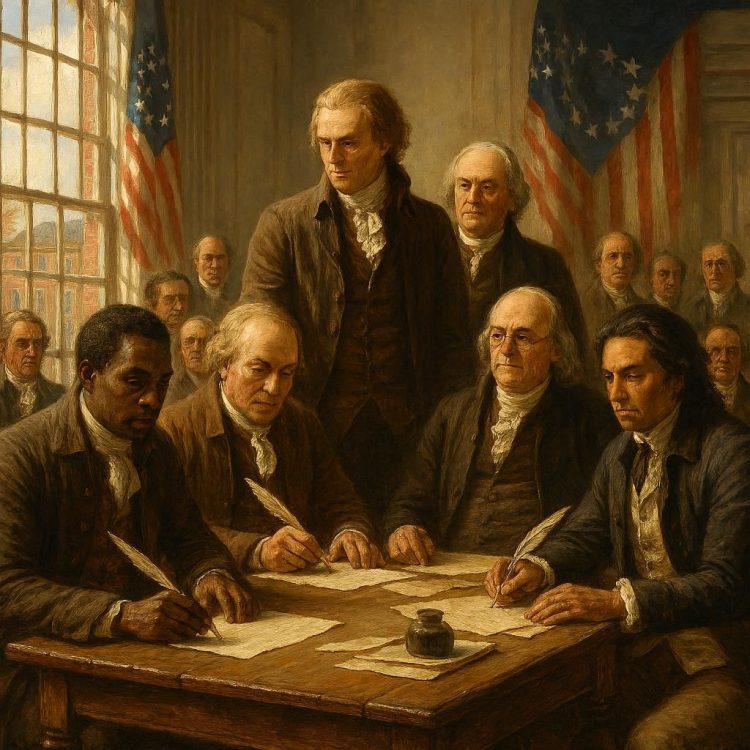
This formative period was shaped by settlement, religion, trade, warfare, and resistance to British authority. The events that unfolded between the early 1600s and the late 1700s laid the foundations of a new nation built on independence, representation, and republican ideals.
🇺🇸 Click to Reveal: Birth of the United States (1776–1789)
Declaration of Independence (1776)
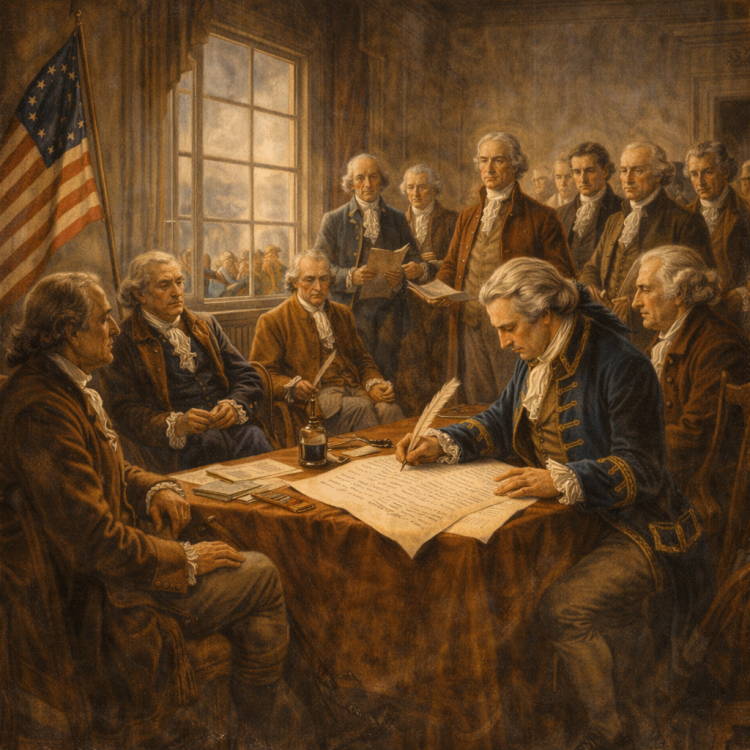
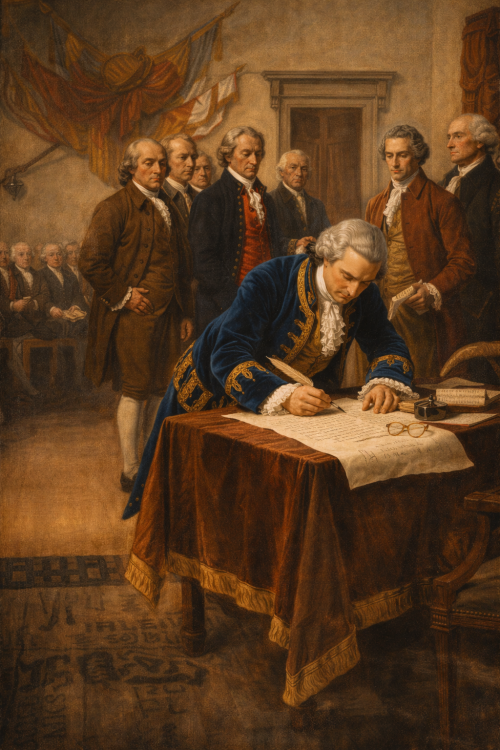
The colonies formally declared independence from Britain, asserting natural rights such as life, liberty, and the pursuit of happiness.
American Revolutionary War
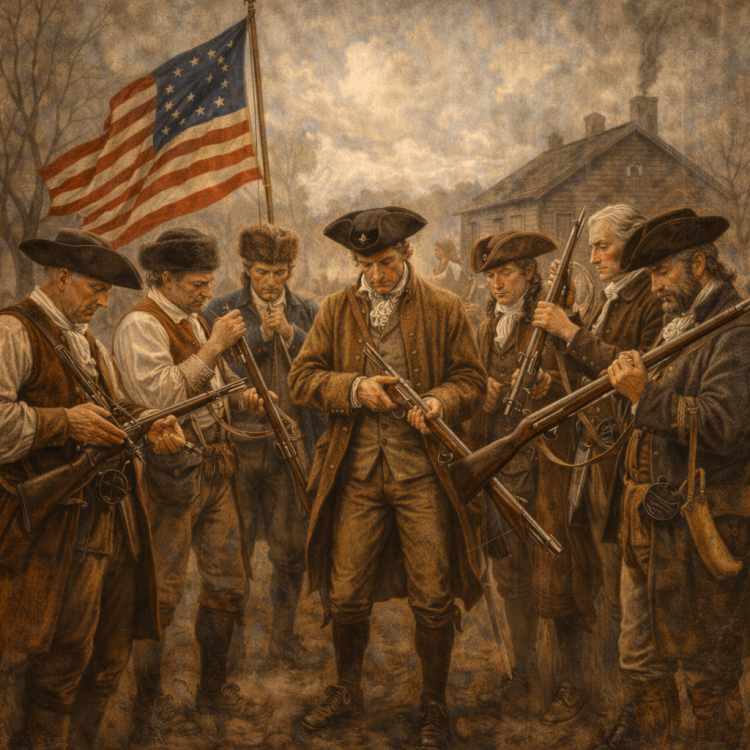
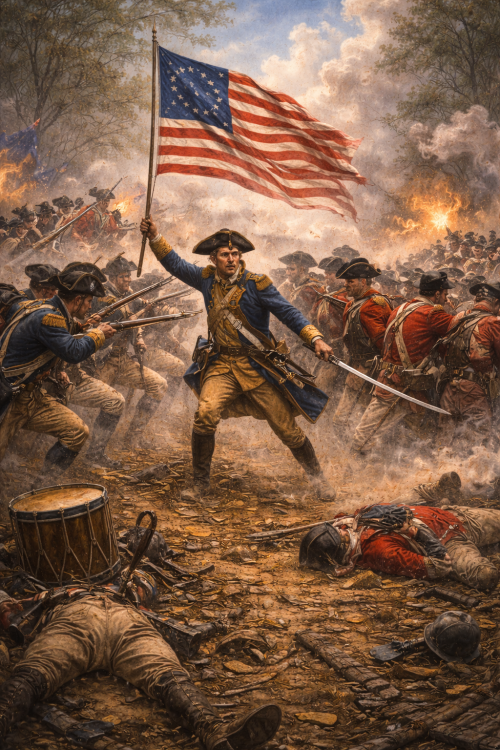
From 1775 to 1783, American forces fought Britain to secure independence, relying on militias, the Continental Army, and foreign allies.
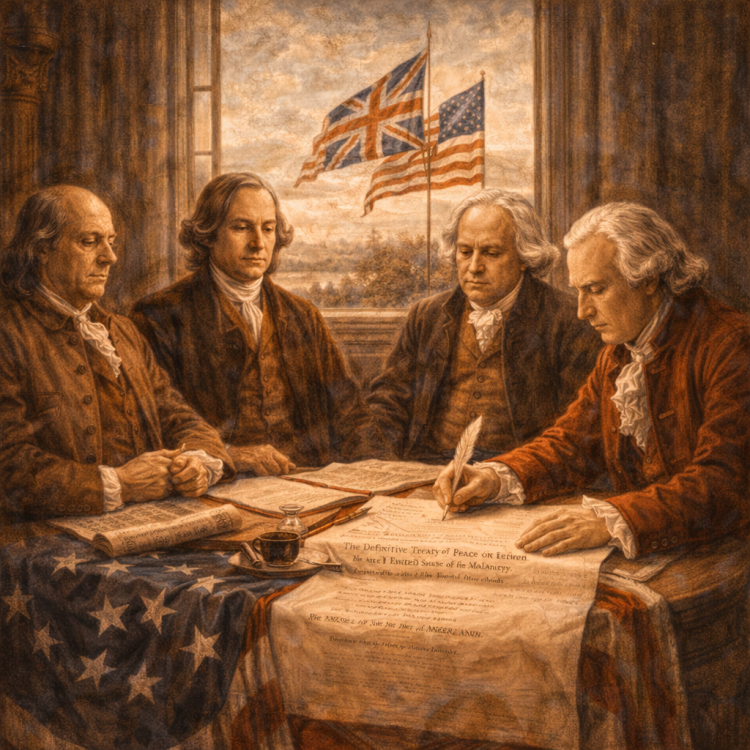
Treaty of Paris (1783)
Britain officially recognized the United States as an independent nation, ending the Revolutionary War.
Articles of Confederation
America’s first national government created a weak central authority, revealing serious political and economic problems.
Constitutional Convention (1787)
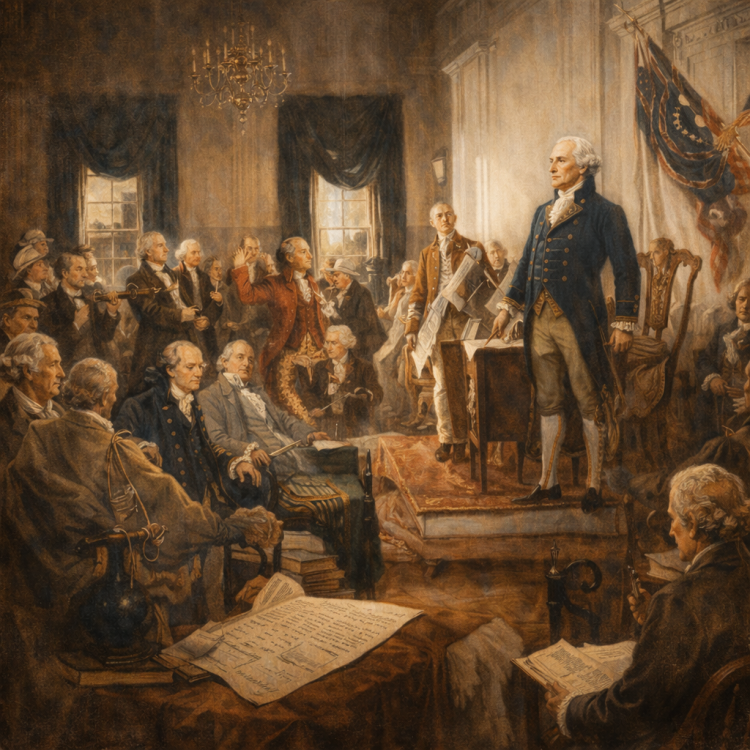
Delegates met in Philadelphia to design a new government based on checks and balances and separation of powers.
Ratification of the Constitution
By 1788, enough states approved the Constitution, creating a stronger federal government.
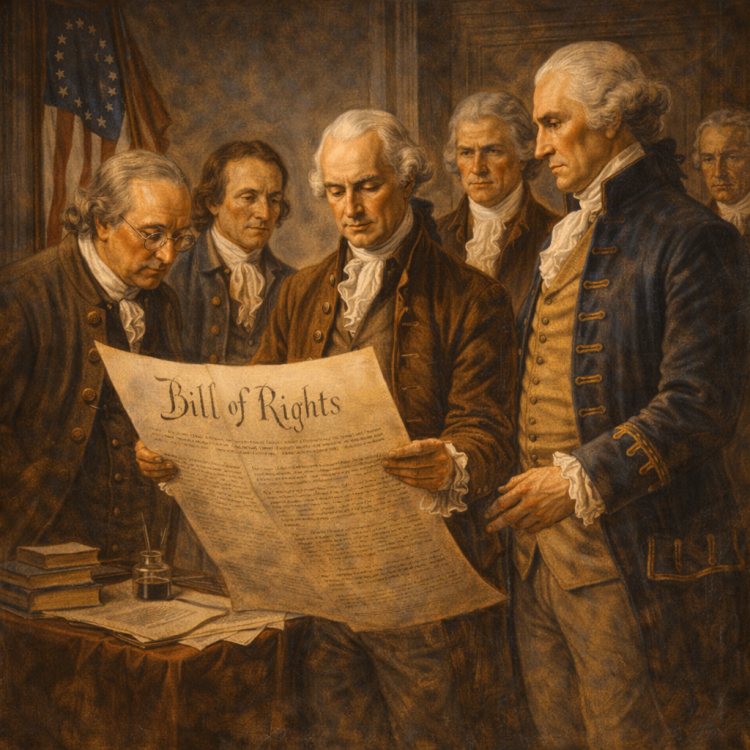
Bill of Rights (1791)
The first ten amendments protected individual freedoms, including speech, religion, and due process.
Washington Becomes President
In 1789, George Washington became the first U.S. president, setting key precedents for the new nation.
Early English Colonies in North America
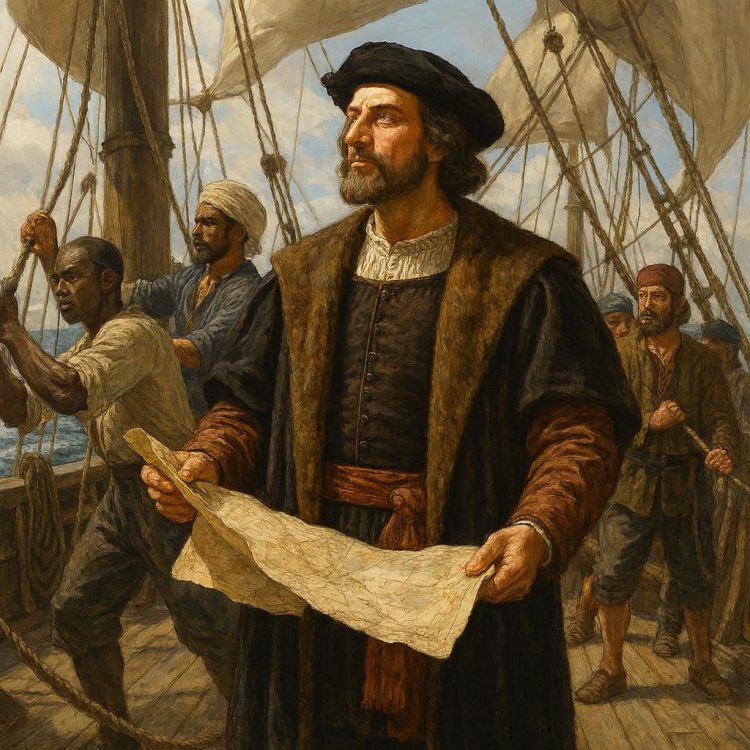
After several failed attempts at colonization, England established its first successful permanent settlement at Jamestown, Virginia, in 1607. Jamestown marked the beginning of long-term British colonization in North America and set the stage for further expansion along the Atlantic coast.
Early colonies struggled with harsh conditions, unfamiliar climates, food shortages, disease, and conflict with Native American nations. Despite these challenges, additional settlements gradually took root, supported by trade, agriculture, and growing migration from Europe.
Religion, Settlement, and Colonial Growth
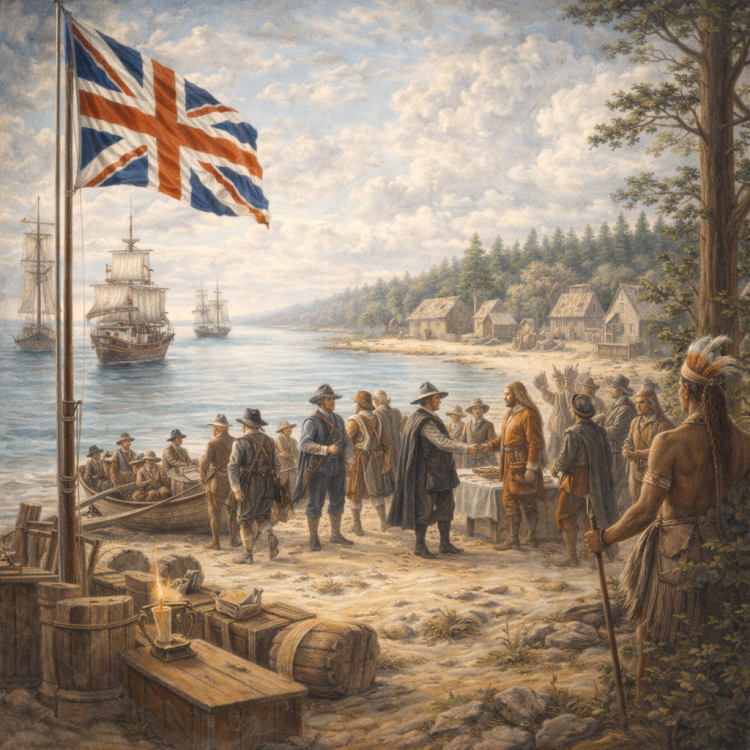
Religion played a central role in the settlement of North America. In the early 17th century, groups such as the Pilgrims and Puritans crossed the Atlantic seeking freedom to practice their beliefs without persecution. They established colonies such as Plymouth and Massachusetts Bay, which became influential centers of population and governance.
Other colonies, including Rhode Island, were founded on principles of religious tolerance and individual liberty. As settlements expanded, towns developed local governments, churches, schools, and trade networks, contributing to the growth of a distinct colonial society.
🇺🇸 Timeline: Birth of the United States (1776–1789)
- 1775 – Armed conflict begins between colonial militias and British troops at Lexington and Concord.
- July 4, 1776 – The Declaration of Independence is adopted, formally announcing separation from Britain.
- 1777 – American victory at the Battle of Saratoga convinces France to support the colonies.
- 1781 – British forces surrender at Yorktown, effectively ending major fighting.
- 1783 – The Treaty of Paris formally recognizes the United States as an independent nation.
- 1781–1787 – The Articles of Confederation govern the nation, revealing weaknesses in the federal system.
- 1787 – Delegates meet at the Constitutional Convention to draft a new Constitution.
- 1788 – The U.S. Constitution is ratified after approval by nine states.
- 1789 – George Washington is inaugurated as the first President of the United States.
The Thirteen Colonies
By the mid-18th century, thirteen British colonies stretched along the eastern coastline of North America. Although each colony had its own government and laws, they shared common experiences under British rule.
These colonies differed economically and socially, but all were tied to Britain through trade, loyalty to the Crown, and imperial regulation. Over time, shared concerns over taxation, defense, and political authority began to unite them.
Britain, Trade, and Imperial Control
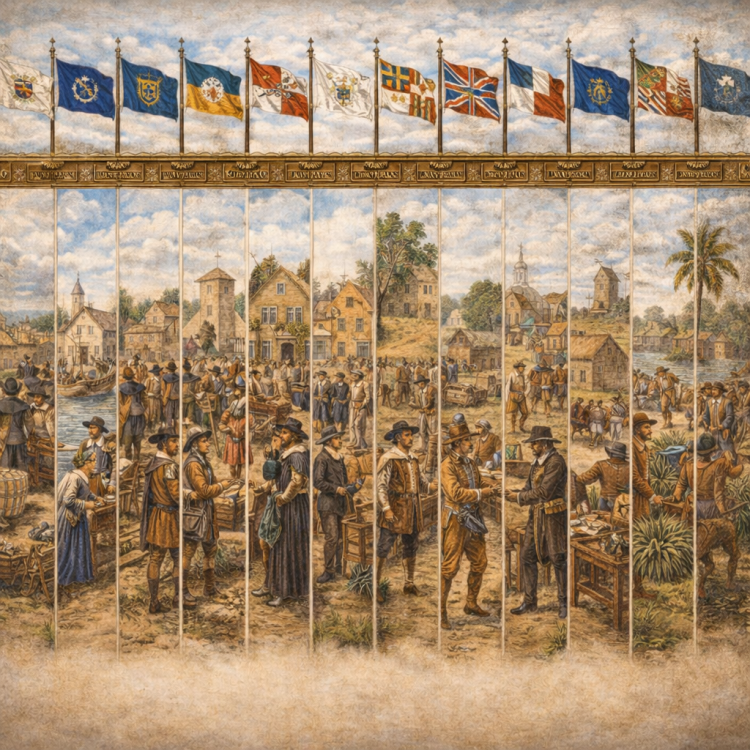
British colonial policy was shaped by mercantilism, an economic system designed to benefit the empire. Colonies supplied raw materials to Britain and served as markets for British manufactured goods. In return, colonial trade was tightly regulated through laws and taxes.
Following costly wars with France, Britain sought to increase revenue from the colonies through new taxes and duties. While Britain viewed these measures as fair, many colonists saw them as unjust, especially because they had no direct representation in Parliament.
Rising Tensions and Colonial Resistance
Disputes over taxation, governance, and political rights intensified during the 1760s and 1770s. Colonial resistance took many forms, including protests, boycotts, petitions, and the formation of local militias.
Colonists increasingly argued that their rights as English subjects were being violated. Political ideas about liberty, representation, and self-rule spread rapidly, helping transform opposition into a broader movement for independence.
The American Revolutionary War
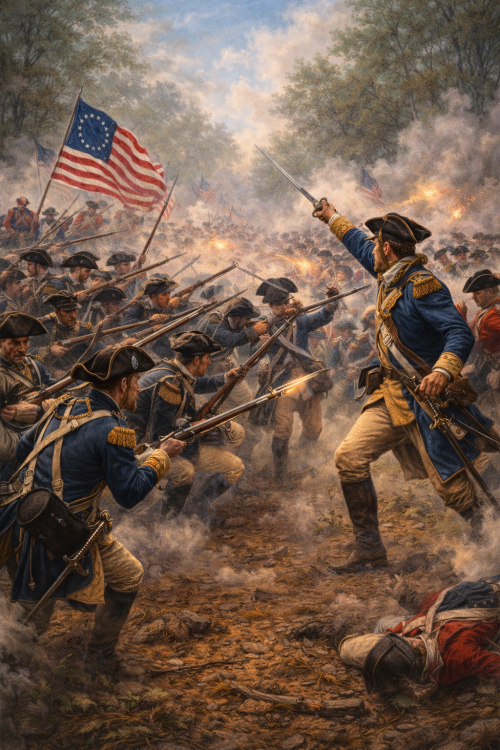
Armed conflict between Britain and the colonies began in 1775, marking the start of the American Revolutionary War. Initially, British forces held significant advantages in training and resources, while colonial militias lacked experience and organization.
Under the leadership of figures such as George Washington, the colonies gradually formed the Continental Army and secured crucial alliances. After years of fighting, Britain was forced to accept defeat.
Independence and the Birth of a Nation
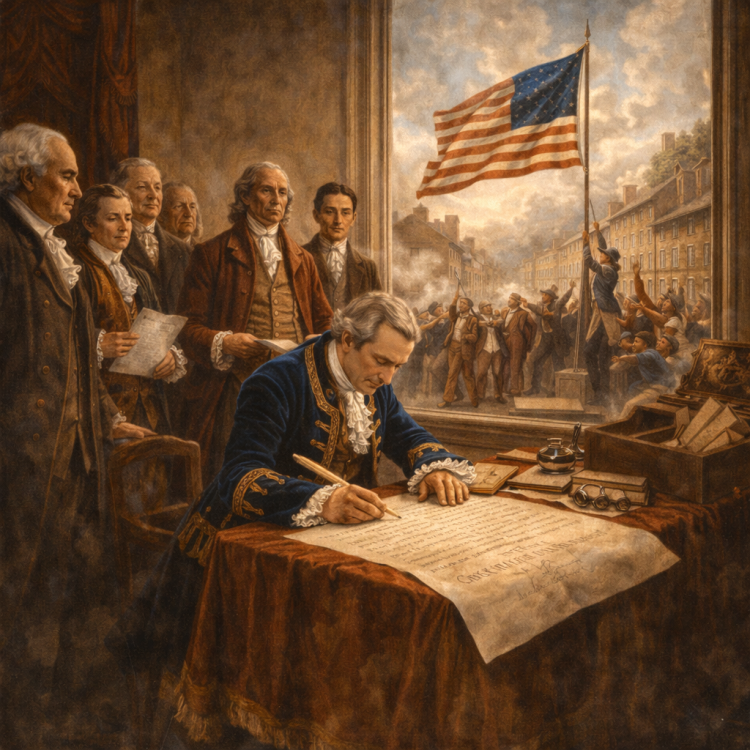
In 1776, representatives of the Thirteen Colonies adopted the Declaration of Independence, formally announcing their separation from British rule. The document articulated powerful principles of equality, natural rights, and government by consent.
The war ended in 1783 with the Treaty of Paris, in which Britain officially recognized the independence of the United States. In the years that followed, Americans worked to establish a stable national government, leading to the adoption of the U.S. Constitution.
Legacy of the Birth of the USA
The birth of the United States transformed the political landscape of North America and introduced revolutionary ideas that would influence nations around the world. What began as a group of British colonies evolved into an independent republic founded on representative government and individual rights.
This era remains central to understanding American identity, democratic ideals, and the nation’s ongoing development.
🇺🇸 Birth of the United States (1776–1789) – FAQ
Why did the colonies declare independence in 1776?
Colonists believed British taxation, laws, and military actions violated their natural rights and political freedoms.
What role did the Declaration of Independence play?
It formally announced independence and outlined the principles of liberty and equality that justified revolution.
How did the colonies win the Revolutionary War?
They relied on military leadership, local militias, foreign aid from France, and Britain’s war fatigue.
Why did the Articles of Confederation fail?
The national government lacked the power to tax, regulate trade, or enforce laws effectively.
What was achieved at the Constitutional Convention?
Delegates created a new Constitution establishing a stronger federal government with checks and balances.
Why was George Washington important after independence?
As the first president, he set key precedents that shaped the new nation’s leadership and stability.
🇺🇸 Quiz: Birth of the United States (1776–1789)
1. What document declared American independence?
2. Which country became America’s most important ally in the Revolutionary War?
3. What was a major weakness of the Articles of Confederation?
4. What was the main goal of the Constitutional Convention (1787)?
5. When did George Washington become the first U.S. president?
6. Why was the Bill of Rights added soon after the Constitution?
📘 Birth of the United States Glossary
The 1776 document that announced American independence from Britain.
The colonial army led by George Washington during the Revolutionary War.
America’s first national government, which proved too weak to govern effectively.
The supreme law of the United States, ratified in 1788.
A system dividing power between national and state governments.
The first ten amendments protecting individual liberties.